
6 years ago I suffered a complete tear of the anterior cruciate ligament (ACL).
At that time I was a physiotherapy student and was familiar with the “standard” protocol for this type of injury: ligament reconstruction surgery was one of the usual options.
After the diagnosis, I consulted with several professionals, both orthopaedic surgeons and physiotherapists, and received different recommendations regarding surgical and conservative treatment.
I understood that, regardless of the option chosen, physiotherapy would be an essential part of the process. That’s why I decided to give rehabilitation a chance before making a definitive decision.
My idea was simple: if the progress was good, I could continue with conservative treatment. And if I ultimately needed surgery, the prior rehabilitation work would allow me to approach it in better condition.
Why did I choose conservative management?
In my case, the progress with physiotherapy rehabilitation was very positive. That’s why I decided to continue down this path.
It was not a decision based on a single factor, but on several aspects of my situation.
1. The functionality of my knee
For me, the functionality of a knee cannot be assessed solely by the presence or absence of an injury on an image.
There are several important elements: stability, pain, strength and range of motion.
With rehabilitation, I managed to regain a full range of motion, be pain-free and achieve levels of strength and stability very similar to those of my other leg.
These results were decisive when deciding to continue without surgery.
2. My level of activity and my goals
It is not the same to have a sedentary life as to lead an active life or be a professional athlete.
I have always led a very active life and have a great passion for sport, although I have never been a professional athlete.
What was important for me was that the functionality of my knee allowed me to continue doing the sports I am passionate about.
And so it has been.
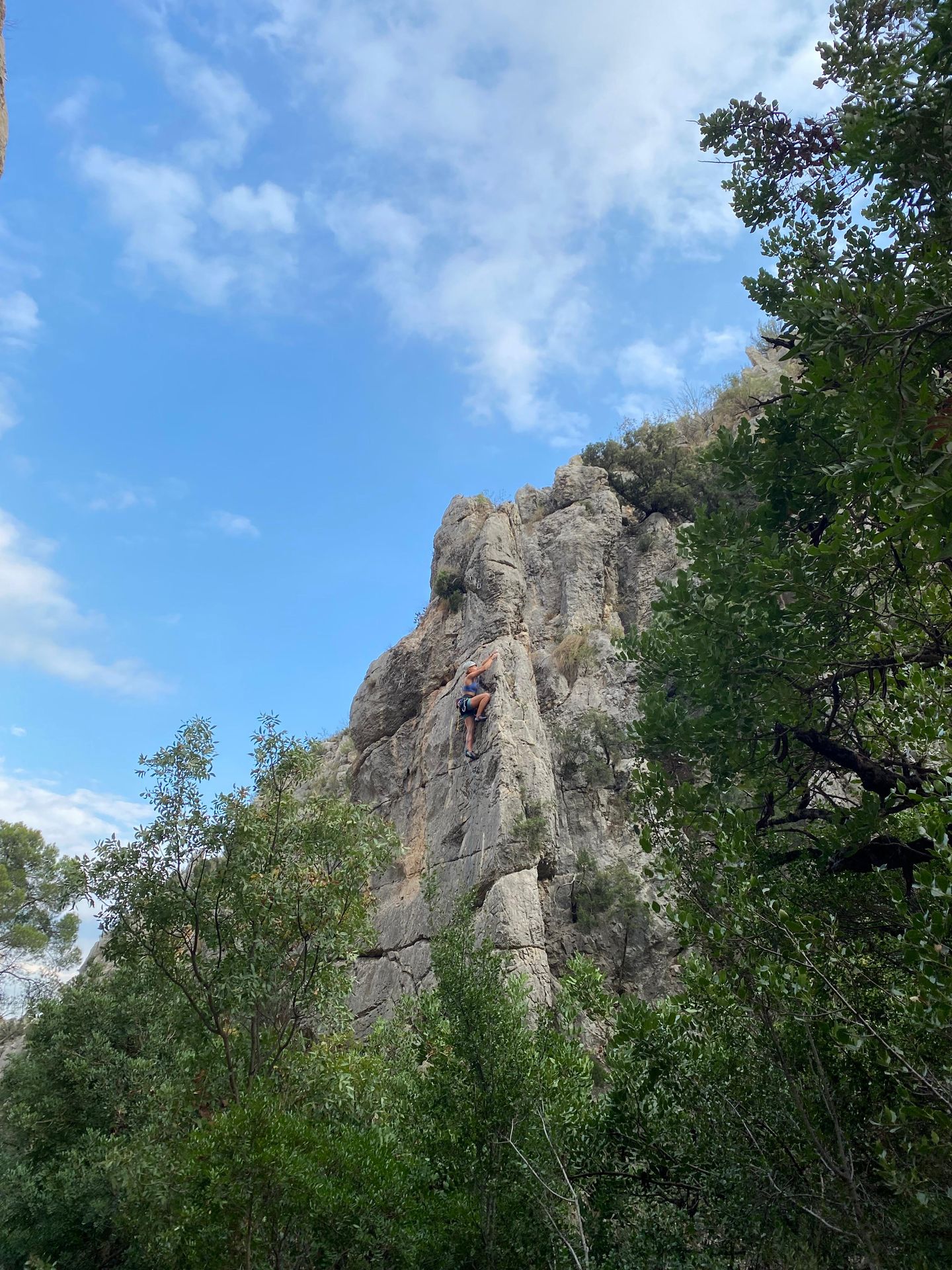
I have been able to continue practicing climbing, tennis, skiing and hiking.

3. Associated injuries
An ACL injury can be accompanied by damage to other structures, mainly menisci and collateral ligaments.
In my case, in addition to the ACL tear, I had a small tear of the inner meniscus, bone edema in the tibia and a soleus tear.
However, once the acute phase of inflammation was overcome, these injuries evolved favourably and did not cause me pain or subsequent problems.
4. Current scientific evidence
Current scientific evidence supports that, in well-selected patients, a structured rehabilitation program can offer functional results comparable to reconstruction surgery.
This does not mean that surgery is not necessary in certain cases.
The decision between surgical management and conservative management should be based on the individual characteristics of each patient and not on a one-size-fits-all protocol.
What this injury taught me as a patient and as a physiotherapist
It has already been 6 years since my injury and I have returned to skiing, climbing, playing tennis and hiking without having to worry about my knee.
But there is something that this experience has taught me especially:
physical condition does not maintain itself.
When I stop prioritising my physical condition, that knee is the first to let me know.
This has made me understand that recovery does not depend on a single great effort, but on the consistency and sustained work over time.

An injury like this makes one thing very clear: to maintain a healthy body and promote longevity, physical preparation is essential.
Whether you get injured or not.
Whether you have surgery or not.
The positive aspect of having gone through a serious injury is that it constantly reminds me: maintaining health and physical condition must be a priority.
The diagnosis does not tell the whole story
Beyond the physical, this experience also taught me that the patient's context matters as much as the injury itself.
Taking the necessary time to choose the best treatment option is essential, because the optimal treatment depends on the person and not just on the diagnosis.
As physiotherapists, we also have an essential role in educating our patients. Our responsibility is to help them understand their situation, know their options, and actively participate in decision-making.
The best decision is always an informed and personalised decision, never a decision made by default.
An injury does not have to define what you can do.
My story with the ACL is just that: my story.
There is no single valid solution for all people with an anterior cruciate ligament tear. Each case must be assessed considering the person, their goals, their level of activity, associated injuries, and their progression.
And, six years later, there is something that I am especially glad to say:
I am still doing what I am passionate about.
— Emily
Physiotherapist at Arbory Clinic
Note: Emily's experience is personal and does not imply that conservative management is suitable for all ACL injuries. The choice of treatment should be made individually in conjunction with the relevant healthcare professionals.
References:
- Frobell RB, Roos EM, Roos HP, et al. A randomized trial of treatment for acute anterior cruciate ligament tears. N Engl J Med. 2010;363(4):331-342. doi:10.1056/NEJMoa0907797.
- Frobell RB, Roos HP, Roos EM, et al. Treatment for acute anterior cruciate ligament tear: five year outcome of randomised trial. BMJ. 2013;346:f232. doi:10.1136/bmj.f232.
- Filbay SR, Bullock G, Russell S, et al. No Difference in Return-to-Sport Rate or Activity Level in People with Anterior Cruciate Ligament (ACL) Injury Managed with ACL Reconstruction or Rehabilitation Alone: A Systematic Review and Meta-Analysis. Sports Med. 2025;55(9):2191-2205. doi:10.1007/s40279-025-02268-5.
- Filbay SR, Rooney J, Cross T. The Cross Bracing Protocol: A novel non-surgical intervention to facilitate ACL healing. Aspetar Sports Medicine Journal. 2023.
- Filbay SR, Rooney J, et al. “The only way you're ever going to play sport again is if you go through surgery”: A mixed methods study exploring anterior cruciate ligament (ACL) injury treatment decisions from the perspective of 734 patients. J Sci Med Sport. 2025.
